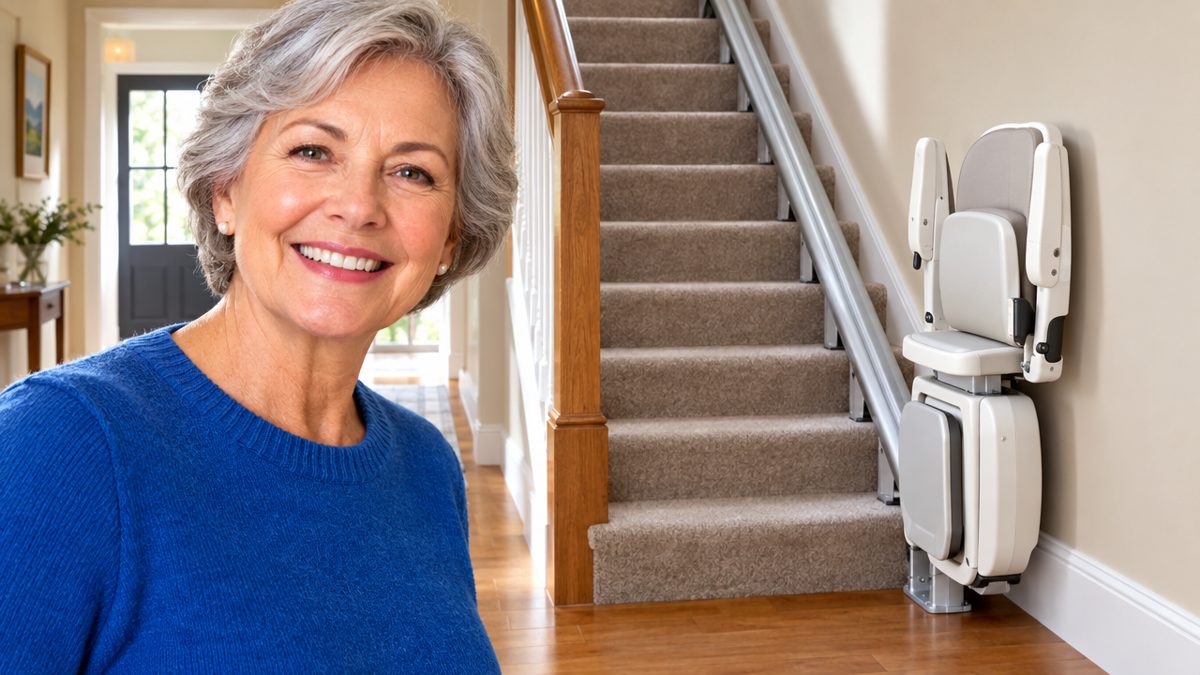
A straight stair lift in the US starts from around $2,000 installed, and most cost $3,000 to $6,000. A curved stair lift starts from around $7,000, and most cost $10,000 to $15,000. The shape of your stairs, and which company you buy from, decide the price far more than the brand name on the chair.
This guide explains what you get for the money, why two homes on the same street can get very different quotes, and where the extra costs come from: curved rails, outdoor models, heavy-duty lifts and optional extras. It also covers cheaper routes such as renting or buying a reconditioned lift, and the questions that help you compare quotes fairly.
Every figure here is a typical range, not a quote. The only way to know your real price is to have your staircase measured, but knowing the ranges first means you will spot a fair offer when you see one.
Stair lift prices at a glance
US stair lift prices fall into two clear bands, and within each band there is a big gap between the lowest published prices and what most quotes come in at.
- Straight stair lift: from around $2,000 installed; most cost $3,000 to $6,000
- Curved stair lift: from around $7,000 installed; most cost $10,000 to $15,000
- Outdoor stair lift: usually more than the same lift indoors
- Heavy-duty models: priced above standard models
- Rental: an installation and removal charge plus a monthly fee, mostly for straight stairs
The lowest prices come from sellers that publish their prices online. AmeriGlide, for example, lists straight lifts from $1,499 before installation and curved lifts from $7,199 with installation included (AmeriGlide pricing). Full-service dealers quote nearer the typical ranges: Lifeway Mobility puts new straight lifts at $2,900 to $8,000 and curved lifts from about $12,000 installed (Lifeway Mobility price guide).
The difference is usually more than the lift itself: it reflects the model, the length of rail, the options, who installs it, and the warranty and local service that come with it.
Why curved stair lifts cost so much more
A curved stair lift costs more because its rail is designed and made for one staircase only. A straight rail is cut to length from standard stock, so it can be supplied quickly and cheaply. A curved rail has to follow every bend, landing and change of angle in your stairs, and that one-off manufacturing is where most of the extra cost sits.
The chair and motor on a curved lift are not hugely different from a straight one. You are paying for the made-to-measure track, the survey needed to design it, and the longer installation. It also explains why curved lifts take longer to arrive: the rail is built after your staircase has been measured.
One detail catches many buyers out. A staircase that looks straight but stops at a landing and turns usually needs a curved rail, because one continuous track has to follow the turn. Some installers offer two straight lifts instead, one for each flight, with a transfer on the landing. That can cost less than one curved lift, but you have to be able to move safely from one chair to the other.
What else changes the price
After straight or curved, a handful of other things move a stair lift quote up or down.
- Length of the staircase. More stairs means more rail, and rail is one of the most expensive parts of the job.
- Weight capacity. Standard models carry roughly 250 to 350 lb. Heavy-duty lifts, with a wider seat and a stronger rail, carry more and cost more.
- Indoors or outdoors. Outdoor lifts need weather-sealed parts and covers, so they cost more than the same lift fitted inside.
- Powered swivel seat. A seat that turns at the top makes getting off easier and safer, and is one of the most common upgrades.
- Folding or hinged rail. If the rail would block a door or hallway at the bottom of the stairs, a rail that folds out of the way adds to the price.
- Brand and dealer. Bruno, Harmar, Handicare, Acorn, Stannah and AmeriGlide all price differently, and the same lift can cost different amounts from different dealers.
When you compare quotes, check each one includes the same things. A low headline price that leaves out the swivel seat or installation is not really the cheapest.
What a stair lift price should include
A fair stair lift quote should be all-in: the lift, the rail, delivery, professional installation and a demonstration of how to use it. Ask for that in writing before you compare prices, because quotes laid out differently are hard to compare.
The warranty matters as much as the price. Many manufacturers cover the motor and gearbox for longer than the other parts, so look at both figures, not just the headline. Ask what a service visit costs once the first year is over, and how quickly an engineer comes out if the lift stops working.
Most modern stair lifts run on rechargeable batteries that charge from a normal outlet, so they keep working for a number of trips if the power goes out. A battery model is the norm, but it is worth confirming on every quote, especially if you live somewhere with frequent outages.
Finally, ask what happens if you no longer need the lift. Some companies will remove it, and some offer a buy-back, which can make a real difference to the true cost over time.
Cheaper ways to get a stair lift
If a new lift is more than you want to spend, there are two common alternatives, and both work best on a straight staircase.
Buying reconditioned. A reconditioned or refurbished stair lift has been checked, serviced and reinstalled with a shorter warranty. It can cost noticeably less than new. Because a curved rail is made for one staircase, reconditioned options are mostly limited to straight lifts.
Renting. Renting suits a short-term need, such as recovery after surgery, or when you are not sure how long the lift will be needed. You usually pay an installation and removal charge plus a monthly fee, and the lift is taken away when you are done. Curved lifts are rarely available to rent, again because the rail fits only your stairs.
Over a long period, renting can end up costing more than buying, so it makes sense to compare the total over the time you expect to need it.
How long it takes from quote to installation
A straight stair lift can often be installed within days of ordering, and the fitting itself usually takes a few hours. The rail fixes to the stair treads, not the wall, so there is rarely any building work.
A curved stair lift takes longer, typically several weeks from survey to installation, because the rail is manufactured to order once your staircase has been measured. The fitting day itself is longer too.
If timing matters, for example a hospital discharge date, say so when you ask for quotes. Some dealers can install a straight lift very quickly, and some offer a temporary rental while a curved lift is being made.
How to get the best price
The single most effective way to pay a fair price is to compare more than one quote for the same staircase. Prices for the same kind of lift vary a lot between sellers: a low published price and a full-service dealer's quote can be thousands of dollars apart, and the right choice depends on what each one includes.
- Describe your staircase the same way to every company: straight or curved, number of steps, and any landings.
- Check whether each price includes installation, and who does it.
- Ask each one the same questions about warranty, servicing and removal.
- Check whether the quote is for a new, reconditioned or rented lift.
- Compare the total cost, not the headline price.
Stair Lifts Comparison was set up to make this easier. You answer a few questions about your staircase once, see a guide price on screen, and we pass your details to installers covering your ZIP code so you can compare quotes side by side. It is free, and there is no obligation to buy.
Frequently asked questions
How much does a stair lift cost on average in the US?
A straight stair lift starts from around $2,000 installed, and most cost $3,000 to $6,000. A curved stair lift starts from around $7,000, and most cost $10,000 to $15,000. Your own price depends mainly on your staircase, the options you choose and the company you buy from.
Is installation included in the price of a stair lift?
Usually, yes. Most stair lift quotes include professional installation, but not all do. Ask for an all-in price covering the lift, rail, delivery and installation in writing, so you can compare quotes like for like.
Why is a curved stair lift so much more expensive than a straight one?
A curved stair lift rail is designed and manufactured for one staircase only, following every bend and landing. A straight rail is cut from standard stock. That made-to-measure rail, plus the survey and longer installation, is what makes curved lifts cost several times more.
Is it cheaper to rent a stair lift than to buy one?
Renting costs less up front, with an installation and removal charge plus a monthly fee. For a short-term need it is often the cheaper choice. Over a long period, buying, or buying reconditioned, usually works out cheaper. Rentals are mostly available for straight staircases.
What is the cheapest way to get a stair lift?
For a straight staircase, a reconditioned stair lift or a short-term rental is usually the lowest-cost option. Whatever you choose, comparing quotes from more than one installer for the same staircase is the most reliable way to avoid paying more than you need to.
The bottom line
A stair lift is a significant purchase, but the price is predictable once you know what drives it. Straight lifts sit in a fairly tight range, curved lifts cost more because the rail is made for your stairs, and options such as a swivel seat, a folding rail or an outdoor model add to the total.
The best next step is to see a guide price for your own staircase. Answer a few quick questions on Stair Lifts Comparison and compare quotes from installers covering your ZIP code, free and with no obligation.